Tracking Your Finances: A Few Practical Tips
A simple, practical guide to tracking your finances using just your phone. Learn how to categorize income and expenses and gain control without stress or complexity.
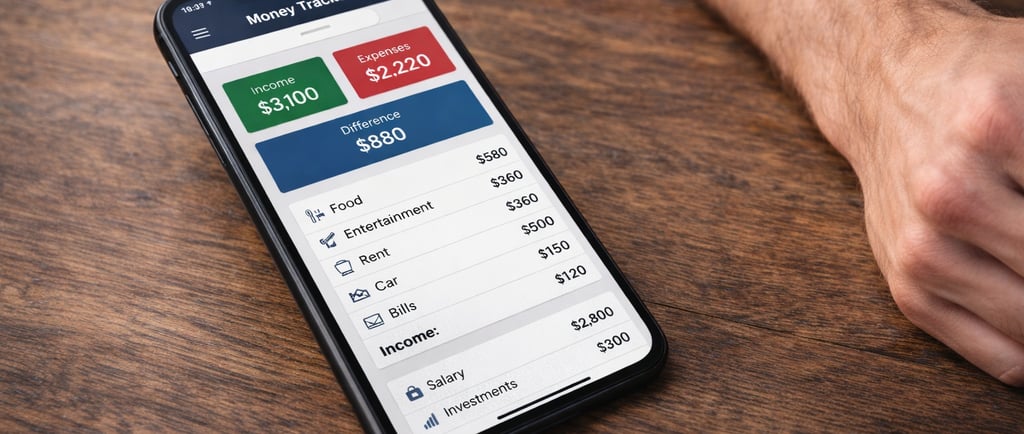
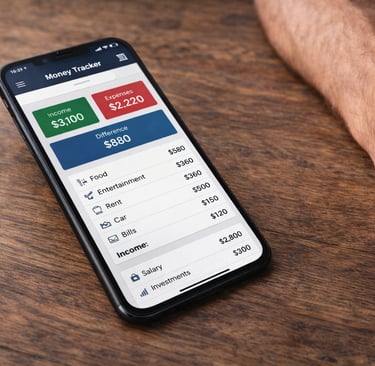
In my book, I talk about money through several rules — Save money, Clear debts, Create additional income — as well as the importance of tracking metrics (Numbers don’t lie).
Now I want to focus on the practical side.
This is how I do it.
Simple. Efficient. Sustainable.
All You Need Is Your Phone
All you really need is a mobile phone.
If you use your phone as a productivity tool, rather than a toy or a time-wasting machine, you can significantly improve your life.
The app I personally use is Money Tracker.
I’m not advertising it — use any app you like, as long as it is:
Free
Simple
Useful
That’s it. No fancy features. No complexity.
What the App Must Show You
At a minimum, you need a clear overview of:
Total income
Total expenses
The difference between the two
This should be visible immediately when you open the app. One glance should tell you where you stand.
If you don’t know your numbers, you don’t control them.
Categorize Everything (But Keep It Simple)
Both income and expenses should be divided into categories.
This allows you to see:
Where your money is going
Where your money is coming from
Choose an app that lets you create custom categories. You don’t need too many — just enough to group similar things together.
Here are some of my expense categories as an example:
Food – basic groceries and essentials: meat, fruit, vegetables, snacks, spreads, protein powder, drinks.
No restaurants or cafés here — only necessary nutrition.Entertainment – anything non-essential and pleasure-based: restaurants, going out, bars, alcohol, event tickets.
Rent – rent or mortgage payment.
Car – repairs, registration, car wash.
Fuel – fuel for the car.
Bills – electricity, water, internet, phone, Netflix, YouTube.
Health – supplements, medical check-ups, dentist.
Cosmetics – creams, perfumes, shampoo.
Clothing – clothes and shoes.
Home – furniture, home items, repairs.
Investments
Gifts
…
And some income categories:
Salary – income from your regular job.
Investments – dividends or other investment income.
Lottery / Betting – winnings.
Sales – money from selling items.
…
Adjust categories to fit your life. There is no universal system.
Consistency Beats Precision
The most important rule:
Track everything, every day.
Every expense. Every income.
That said, you don’t need to be obsessive.
I personally round amounts to the nearest 5:
If something costs 13, I log it as 15
If something costs 31, I log it as 30
By the end of the month, it balances out. You won’t be far off — but you also won’t burden yourself with saving every receipt or tracking every cent.
The goal is not perfection.
The goal is awareness.
Make It Useful, Not Stressful
This system should improve your life, not add stress to it.
You’re not building an accounting department.
You’re building control.
Money is just another metric — like body weight, calories, or training volume.
When you track it consistently, it stops being emotional and starts being factual.
And facts are powerful.
© 2026. All rights reserved.